Cat shirt with your own design: ideas for a one-off
A cat shirt works best when the design is wearable rather than just cute. Ideas on style, color palette, shirt type and gifting for cat people.
A cat design on a shirt comes in many variants, but a large part of them stays interchangeable. The subject gets stronger when you decide early whether your design should come across as playful, calm, graphic or deliberately bold. That direction is exactly what separates the future favorite piece from an arbitrary animal print. It also helps you turn a still vague idea into a clear picture before you even settle on the first design.
This article goes step by step through the decisions that make a good cat shirt: the stylistic direction, concrete design ideas, the color palette, the choice of shirt type and the most common mistakes. By the end you will know how your own cat becomes a design idea of its own.
Which stylistic directions carry especially well
With cats, four directions work reliably in our experience, and they tend to rule each other out rather than mix.
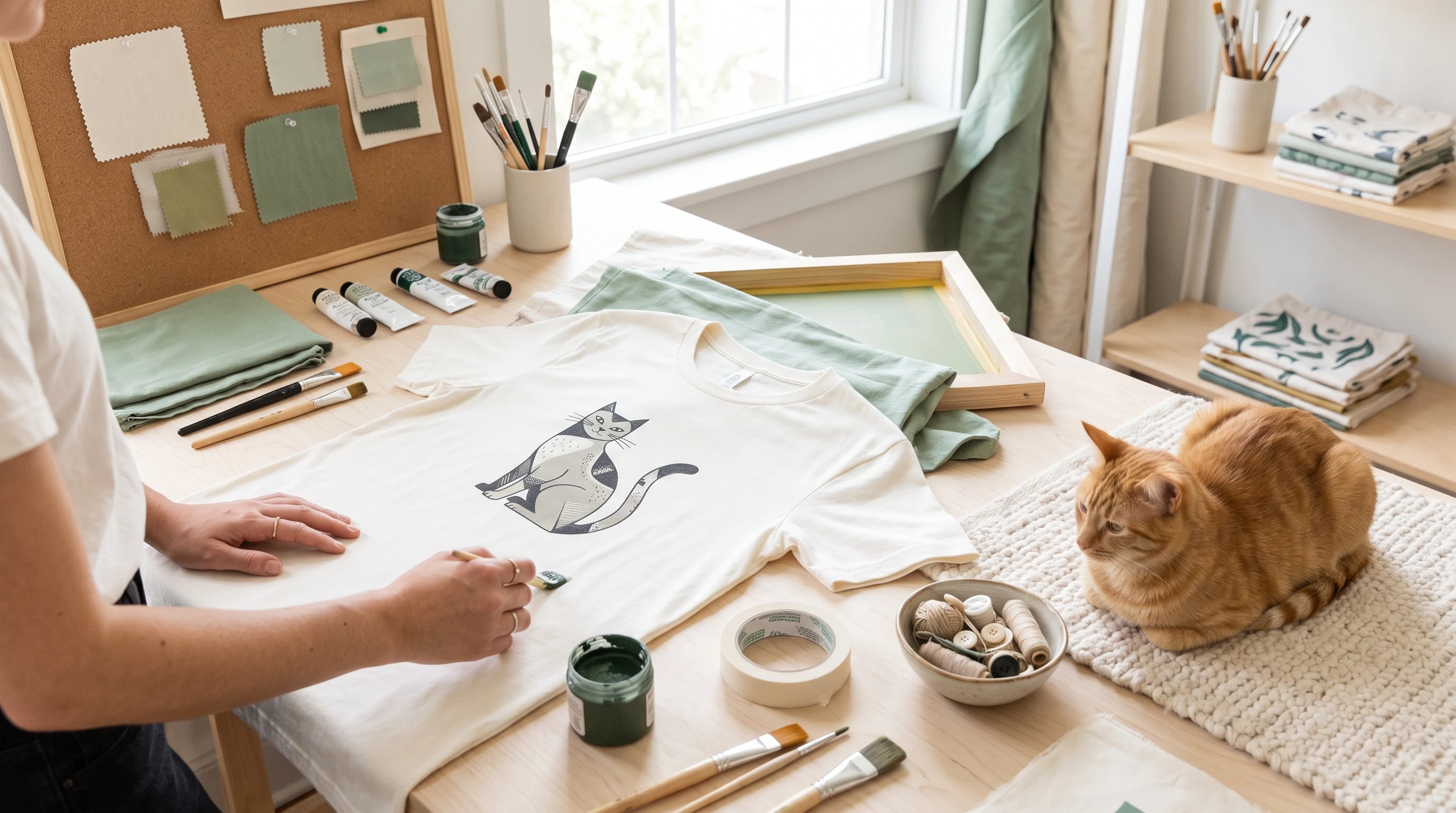
- Reduced and graphic: a clear silhouette or a geometric shape with few lines. Looks modern and restrained.
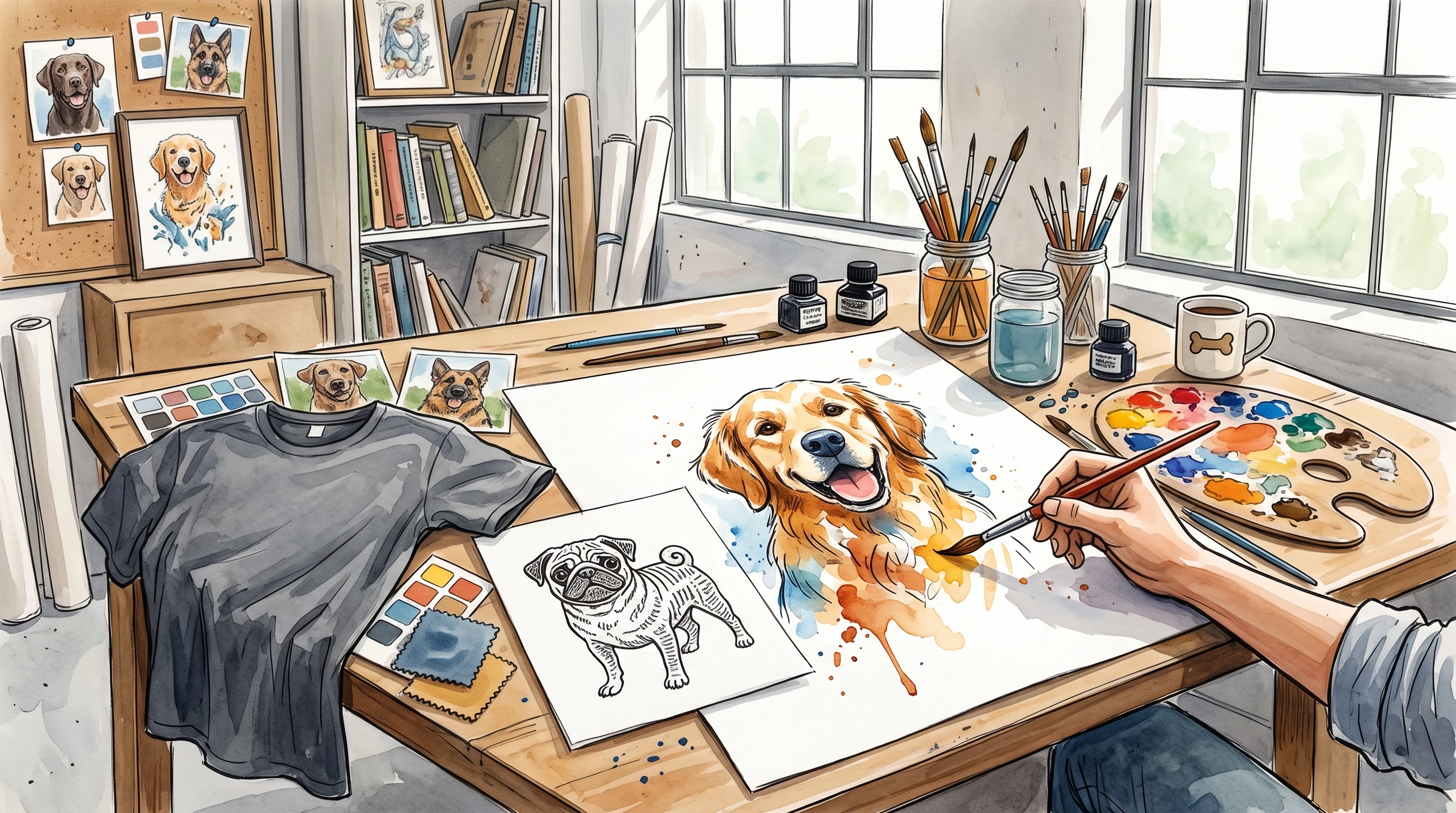
- Artistic: a watercolor or ink portrait that softly catches the fur markings. Radiates warmth and stays personal.
- Playful: a charming illustration, for example the cat in a small scene. Comes across as light and approachable.
- Calm and mystical: a cat with moon, star or mandala elements. Atmospheric and a little mysterious.
What matters is that you pick one of these directions. A design that wants to be cute, funny and artistic at the same time loses its character. A clear focus almost always looks more refined.
Design ideas that work as a picture
Concrete ideas help more than abstract style labels. These approaches carry a shirt because they follow a single visual idea instead of several at once:
- A watercolor portrait of a tabby or ginger tabby cat in warm tones that puts the eyes at the center.
- A geometric cat built from clean shapes, reduced to two or three colors.
- A playful scene: the cat among butterflies or flowers, in calm, coordinated colors.
- A sleeping cat as a fine line drawing, almost like a sketch.
- A cat with moon or mandala elements for the calm, mystical direction.
The same principle applies to each of these designs: better to play out one element consistently than to line up many elements side by side. The visual idea should be readable at first glance.
The color palette and its effect
The color palette helps decide whether a cat design looks stylish or arbitrary. Black and white with a single accent, green eyes in an otherwise monochrome portrait for example, comes across as elegant and graphic. Warm earth and pastel tones make a picture soft and approachable. Cool blues and violets give a cat something atmospheric that fits the calm, mystical direction well.
Keep the palette deliberately narrow. Two or three coordinated colors usually carry an animal design better than a colorful mix that pulls the eye away from the animal. And think about the shirt color at the same time: a light design needs a dark fabric as its stage, a dark design comes out more clearly on light fabric.
Which shirt type suits the design
The fabric shapes the effect more than many expect. Three rough guidelines help with the choice:
- Cotton shirt: the everyday basis for designs you want to wear often. Uncomplicated and versatile.
- Premium shirt: the heavier fabric gives a design more presence and works well for a more valuable gift.
- Designer shirt: worth it when the design may run across more area, for example as a repeating pattern with the cat as a recurring element.
Think early about whether the shirt should sit quietly in everyday life or deliberately stand out. The type follows from that. Anyone who decides this only after the design sometimes finds that the visual idea and the fabric do not go together. You will find the differences between the editions laid out clearly on the pricing page.
Common mistakes with cat shirts
Some pitfalls keep coming back. Once you know them, they are easy to avoid:
- Betting on "cute" alone. A generic clipart kitten on the chest looks like many others and ages fast. A clear attitude carries longer.
- Too many elements. Cat plus hearts plus stars plus lettering plus paws take all the calm out of the picture.
- A design that is too small and centered. A tiny picture on large, single-color fabric quickly looks lost.
- Color and fabric not thought through together. A design that competes with the shirt color loses contrast.
The common denominator: decide whether the shirt should be charming and light or calm and stylish, and carry that attitude all the way through.
From your own cat to a design idea
You do not need a perfect photo to get a personal design. Often it is enough to put your cat's most distinctive traits into words: fur color and markings, the shape of the ears, the typical pose, the expression of the eyes. A tabby cat with green eyes in a calm watercolor feels personal right away, without having to be an exact likeness.
Also think about which mood fits your cat, the cuddly one, the independent one, the playful one. That short description turns into a design idea of its own that makes your cat recognizable while still working as a picture, instead of looking like a photographed pet. That is exactly the difference between an arbitrary animal print and a design that was drawn in this form only once.
More than an animal design: the quiet statement about yourself
A cat design often says more about the person wearing it than about the animal. Someone who picks a finely drawn, calm portrait carries a different attitude than someone with a playful cartoon cat. That is why it pays to think briefly, before the design, about the impression the shirt should leave: calm and style conscious, warm and personal, or light and humorous.
That statement lifts a cat shirt beyond a mere animal picture. It is also the reason a deliberately chosen design gets worn gladly and often, while a generic piece is quickly sorted out.
As a gift: match the direction to the person
A cat shirt is a rewarding gift for anyone who loves their cat, from a birthday to a small token. When giving one, the same thought helps as with a piece for yourself: match the direction to the person. A calm, stylish portrait for the elegant type, a playful illustration for someone who likes things light and charming.
If you pick up the fur color or a typical character trait of the recipient's cat, the shirt becomes a true one-off. With such a personal subject in particular, you feel the difference between an arbitrary animal picture and a deliberately chosen interpretation, and that is exactly why a gift like this lands well.
A sensible way to go about it
- Start in the Nature and Animals category under pets.
- Decide on a direction: playful, calm, graphic or artistic.
- Keep the color palette narrow and factor in the shirt color right away.
- Settle on the shirt type early, matched to the effect you want.
- Compare several variants before you decide.
When you want to get started, you describe your design in the design generator in your own words and get several finished variants to choose from. Inspiration for style and color is in the gallery, and the differences between the editions are on the pricing page. Every design is generated individually and exists in this form only once, your cat, your style.
FAQ
Do I need a photo of my cat for a personal design?
No. A description of the distinctive features is usually enough: fur color and markings, ear shape, typical pose and the expression of the eyes. From that comes a design of its own that makes your cat recognizable without being an exact likeness.
Which shirt type suits a cat design?
The cotton shirt is the everyday basis for designs you wear often. The premium shirt gives the picture more presence through its heavier fabric and works well as a gift. The designer shirt is worth it when the design may run across more area, for example as a repeating pattern.
How do I keep my cat shirt from looking arbitrary?
Follow a single visual idea instead of several at once, keep the color palette narrow at two or three coordinated tones and decide clearly on one direction, playful, calm, graphic or artistic. A clear focus is almost always more convincing than an overloaded design.
Does a cat shirt work as a gift?
Yes, especially when you match the direction to the person receiving it: a calm portrait for the elegant type, a playful illustration for the light-hearted one. If you pick up the fur color or a character trait of the cat, it becomes a personal one-off.